






















Convicted murderer Kenneth Smith became the first person in the United States to be executed by nitrogen gas, a contentious new technique that some experts have warned might result in excruciating pain or even torture.
Because of his part in the 1988 murder-for-hire scheme that resulted in Elizabeth Sennett’s death, Smith was placed on death row. He narrowly escaped death by lethal injection in 2022 because prison staff failed to insert two intravenous lines into his veins in accordance with protocol, which led to the suspension of his execution. After an hour of trying, they were only able to insert one line.
Smith now faced a new destiny: being killed by nitrogen gas. For a maximum of fifteen minutes, he was restrained by a mask that released pure nitrogen gas. That caused his brain’s oxygen supply to be cut off, which caused him to go unconscious and die.
In reaction to the problems with lethal injection, the most popular method of execution in the US, some jurisdictions have developed alternatives like this one.
The death penalty is still in place in around half of the US states; it is applied in various ways, including hanging, firing squad, and electric chair. Though certain state courts have outlawed some of these techniques, the US Supreme Court has not declared any of them to be illegal.
Why not provide a fatal injection?
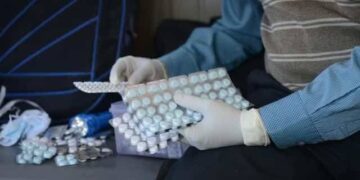
Since Texas began using lethal injection in 1982, it has been the preferred method. Lethal injection entails injecting medicines that sedate and kill the convict. In the United States, 24 people were executed by lethal injection last year, primarily in Florida and Texas.
However, there have been numerous ethical and practical issues with fatal injections. The prisoners have endured agony as a result of several botched executions. Some prisoners, including Smith, have had their executions postponed or cancelled due to their inability to get appropriate veins. However, several states have had difficulty obtaining the medications required for lethal injections because pharmaceutical companies have either stopped making them or refused to sell them.
2011 saw a restriction on the export of lethal injection medications by the UK and the EU, and in 2016, Pfizer—the last significant supplier of these drugs—ceased to sell them for use in capital punishment. Consequently, several jurisdictions have turned to employing illicit or unapproved medications obtained from private vendors, such as compound pharmacies.
Why was nitrogen gas used by Alabama?
Some states have also looked into nitrogen gas as a potential solution. Mississippi, Oklahoma, and Alabama have all endorsed the use of nitrogen gas in executions and have supported the practice in court. They contend that because nitrogen gas causes pleasure and unconsciousness prior to death, it is a kind and painless method of ending life. They give instances of workplace mishaps in which employees perished from nitrogen hypoxia without realising it.
However, opponents of nitrogen gas claim that it is an untested, experimental technique that might hurt and suffer the prisoners.
It’s an experimental practice, according to Dr. Jeff Keller, President of the American College of Correctional Physicians. Numerous things can go wrong.
The process is meant to be painless, according to Deborah Denno, a criminologist at Fordham Law School who analyses the use of the death penalty. However, I must underline that’s just a theory. She draws attention to the possibility of improper fit and air leakage in nitrogen gas masks. She cautions that Smith might throw up or suffer brain damage if he survives the execution.