
























India and Sri Lanka have had a long and fruitful connection, however on August 10th, 2023, a conversation began again about an island that was donated from India to Sri Lanka. In his parliamentary address in response to the opposition’s no-confidence vote, Prime Minister Narendra Modi emphasised this issue. An important story of Nehru – Gandhi losses is explained further.
The island was ‘gifted’ to Sri Lanka by the Indira Gandhi regime, and Modi’s comments about it had as much of an impact as the landslide victory the Bharatiya Janata Party-led National Democratic Alliance achieved in the Lok Sabha vote on the no-confidence motion to show just how much.
Sri Lanka now owns Katchatheevu Island thanks to Indira Gandhi.
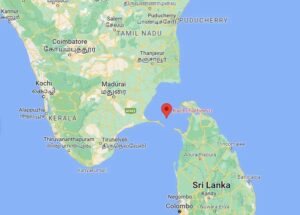
A growing movement is underway to reclaim Katchatheevu Island, which is inside the boundaries of the India–Sri Lanka border close to Rameswaram and has become a contentious focal point. Historically, Tamil fisherman from both India and Sri Lanka have used this island as a safe haven.
In a historic moment, the island changed hands from India to Sri Lanka in 1974, when Prime Minister Indira Gandhi signed over sovereignty as part of a bilateral agreement.
The island became a part of Sri Lanka after Prime Minister of India Indira Gandhi and President of Sri Lanka Shrimavo Bandaranaike signed an agreement in 1974. An uproar began in India shortly after Katchatheevu island changed hands, demanding that it be returned to Indian control.
The resolution to recover sovereignty over the island was adopted by the Tamil Nadu Assembly in 1991. Jayalalithaa, then chief minister of Tamil Nadu, took the case to the Supreme Court in 2008 to have the island pact nullified, bringing it back into the public eye.
Katchatheevu Island’s Past :
Isolated from the mainland, the barren island of Katchatheevu is thought to have formed after a volcanic eruption in the 14th century. This island was a contested territory between India and Sri Lanka during the time of British rule. Both countries made ownership claims for the land in 1921, but it didn’t stop the ongoing dispute.
Before, fishermen from both countries fished in waters belonging to the other, confusing the issue of maritime jurisdiction. The years between 1974 and 1976, however, saw a change in course as the marine line Agreement was ratified by the two countries, establishing the international marine line that separates them.
This landmark agreement allowed Indian fishermen to visit Katchatheevu Island for the limited purposes of net drying and the annual St. Anthony’s Festival. However, the island had strict rules against fishing. However, Indian fishermen still regularly crossed the maritime border with Sri Lanka in pursuit of fish.
The relative peace along the maritime boundary was broken by Sri Lanka in 2009 when it increased its security patrols. The increased security measures were implemented to prevent the return of Tamil rebels to the area. Sri Lankan fishermen began asserting their authority over the island and restoring their presence in the area after the fighting ended in 2010.

There have been calls to retake the island :
Under the accords struck between India and Sri Lanka in 1974 and 1976, the island is now considered part of Sri Lanka’s territory. The Supreme Court is now hearing arguments in the case. Indian citizens can now visit Sri Lanka visa-free for religious purposes.
In 2022, near the coast of Katchatheevu Island, fishermen from Rameswaram were attacked by the Sri Lankan Navy, a traumatic experience for those involved. These fishermen related their harrowing experience, claiming that a Sri Lankan Navy patrol boat had singled them out for attack when they were out fishing in the area. The fisherman was thrown into the water when one of their boats was sunk during the violent fight. Thankfully, their fellow fisherman responded quickly and successfully rescued them.
There has been a growing movement to reclaim Katchatheevu Island after a string of repeat incidences. Tamil Nadu’s administration has said that India regaining control of this territory is the solution to this ongoing problem. During meetings with Prime Minister Narendra Modi in June 2021 and April 2022, the Chief Minister of Tamil Nadu delivered two memorandums stressing the importance of reclaiming Katchatheevu Island. These letters highlighted the severe losses and difficulties faced by fishermen in Tamil Nadu.
After losing the Coco Islands, Jawaharlal Nehru :
The costs India has paid for strategic blunders made during the Nehruvian era are more than they at first appear. For decades, the Indian public was kept in the dark about Jawaharlal Nehru’s many mistakes, allowing him to keep the dignified image of the rose-bearer he rarely merits due to his activities against the national interest.
India has given over territory of great strategic importance to Pakistan and China, but the Congress party, led by former Prime Minister Jawaharlal Nehru, is also to blame. Prime Minister Nehru’s wavering has had repercussions well beyond the traditionally volatile regions of Jammu Kashmir and Ladakh.
Due to Nehru’s poor strategic knowledge and inability to negotiate effectively with the British, South Asia lost control of the Coco Islands, which were just as strategically important as the Andaman and Nicobar archipelagos.
The Coco Islands: A Brief History :
Located around 1,255 miles southeast of Kolkata, the Coco Islands are a major player in the South Asian region. This group of islands is submerged into the Bay of Bengal as a continuous chain, with its geological origins in the Arakan or Rakhine Mountains, and then reemerges as the Andaman and Nicobar Islands.
These strategically important islands are located to the north of the Andaman archipelago and are geographically similar to India’s own Andaman & Nicobar Islands. Due to Indian reluctance to make a strong claim over the Coco Islands, Myanmar has de facto control over them at present.
The British Indian government set up a penal colony on the Andaman Islands in the early 19th century to house prisoners from the Indian subcontinent. Notably, the Coco Islands were an important source of nourishment for this community. According to recorded history, the British administration reportedly leased these islands from the Burmese Jadwet family.
Inadequate administration caused by the decision to lease control of the Coco Islands led to the British Indian government handing over control to the government of Lower Burma in Rangoon. In 1882, the islands were legally incorporated into British Burma following this change. The islands remained a self-governing crown colony even after Burma gained independence from British India in 1937.
The Coco Islands were in a similar position as the Lakshadweep and Andaman & Nicobar Islands as the British prepared to leave India in 1947. Imperial officials in India’s waning days were considering a range of options that could slow the growth of a strong, independent India.
In this context, the British Raj was planning to withhold the Lakshadweep Islands, along with the Andaman and Nicobar Islands and the Coco Islands, from the newly developing Indian nation. To maintain their power and influence even after giving up direct authority, the British intended to split India into various regions.
Knowing that Sardar Patel was a cunning negotiator, Viceroy Lord Mountbatten approached Nehru with a proposal in which India would lease the islands to Britain for use as a communications hub.
On the 19th of July, 1947, Lord Mountbatten reported that he had spoken with Nehru, who was quite cordial and said that there was no obstacle to an official approach being made, albeit he could not commit himself until all ramifications had been addressed. The Government of India consented “without prejudice” to the suggested arrangements after receiving an official request to do so following the aforementioned discussions.
Another historical gaffe committed by the former Prime Minister Nehru was his inaction in pressing the British for possession of the Coco Islands. After being conquered by Burma, these islands are currently being used by China to keep an eye on neighbouring India. China has established an airfield and radar station on the key islands to conduct surveillance operations within the country.
The crucial Coco Islands are now a threat to India’s national security since former prime minister Nehru threw up the opportunity to gain control of them. If not for Sardar Patel’s brashness, India might have lost the islands of Lakshadweep and Andaman and Nicobar.
The British wanted to take India’s vital islands from it.
Many islands in the Indian Ocean, Bay of Bengal, and the Arabian Sea caught the imperialists’ eye as potential strongholds to maintain Western control over the region. The British believed that by excluding these islands from free India, they might limit India’s regional importance and therefore maintain control over the country.
According to an article by KRN Swamy published in The Tribune India, government records obtained long after Independence revealed details about British plans for these strategically important islands. Through his shrewd diplomacy, Sardar Patel prevented the loss of sovereignty over the islands of Lakshadweep and Andaman & Nicobar to the British.
After losing control of the Lakshadweep and the Andaman Islands, the British Empire moved its attention to establishing its dominance over a major island in the Bay of Bengal. Negotiations for the Coco Islands, including both Great Coco Island and Little Coco Island, began as a result of this goal. The British, keen to assert control over the islands, sought a tripartite agreement to meet their defence needs via strategic application.
However, some of the empire’s top generals were wary of having the Coco Islands join a free India. Instead, they favoured having a Commissioner appointed by the Governor-General of India oversee the islands until the treaty’s conclusion. Their goal was to convince independent India’s ruling elite that the Coco Islands belonged to the newly minted dominions, not India.