





















” If I had not left my paper blank and left the exam hall, I would have topped the university.“This sounds like what Uddhav Thackeray, the state’s former chief minister, declared today, that he would still be in office today if he had never resigned in the first place, over an hour after the Supreme Court rules on the political crisis in Maharashtra. While lecturing the current Chief Minister Eknath Shinde and the Deputy Chief Minister Devendra Fadnavis, Thackeray declared, “I would have been the chief minister had I not resigned.”
The SC ruled today that because Uddhav resigned without taking a floor test, it cannot compel the restoration of his government. The Court also ruled that because former Maharashtra Chief Minister Uddhav Thackeray had already resigned, the then-governor was correct to invite a coalition led by Eknath Shinde to establish the state government. “Petitioners argued for the return to the pre-existing situation. Thackeray did not take the floor test, nevertheless. The status quo might have been reinstated had Uddhav Thackeray not resigned, according to the Court.
The Court also stated that the Speaker was improper to appoint an Eknath Shinde group whip and that the then-Governor’s decision to have a floor test was incorrect. The Court said that the former governor of Maharashtra, Bhagat Singh Koshyari, “Governor ought not to have relied on the letter.” The letter made no mention of Uddhav Thackeray’s declining support. The Governor’s use of discretion was not in conformity with the Constitution. Nothing in the messages that the Governor relied on suggested that the disgruntled MLAs wanted to stop supporting the administration. The floor test cannot be used to settle internal party disagreements, the statement continued. “Neither the Constitution nor the law permits the governor to join the political sphere and play a role either in inter-party or intra-party disputes.
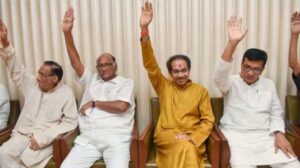
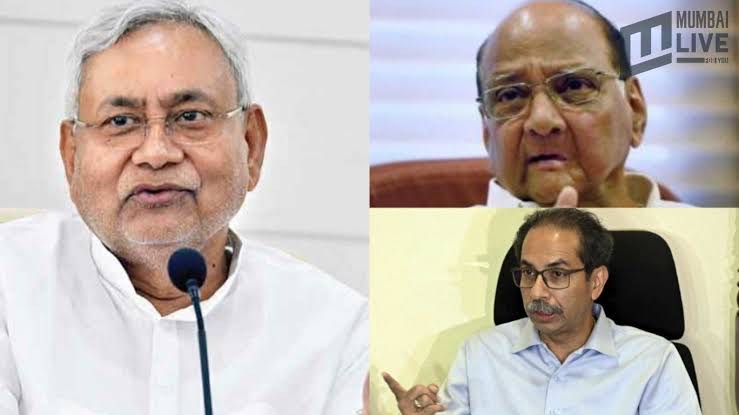
Uddhav Thackeray acknowledged the decision and made an effort to impart “ethics” to the Chief Minister in office and the Deputy Chief Minister. CMs Eknath Shinde and Devendra Fadnavis, according to him, ought to step down if they still possess any moral integrity. “I’m not fighting for myself; democracy needs to be preserved. In an interview with the media on May 11, Thackeray stated, “If the current chief minister of Maharashtra and deputy chief minister have any ethics, then they should resign.” Notably, Thackeray was there when Nitish Kumar, the chief minister of Bihar, spoke to the media following the SC’s ruling on the political situation in Maharashtra. Nitish Kumar, the chief minister of Bihar, and Tejashwi Yadav, his deputy, met with Thackeray today at his home to fortify the opposition coalition against the BJP in advance of the Lok Sabha elections in 2024. In the evening, Sharad Pawar, the leader of the Nationalist Congress Party, was also meet with Kumar and Yadav.
While Thackeray lectured the current Maharashtra CM and his Dy CM on “ethics,” it appears that he forgot who started the state’s major political drama, which finally caused a significant rift within the Shiv Sena party. Up until the BJP violated its “ethics” and “Hindutva ideology” and joined forces with the Congress and the NCP to form the government, Uddhav Thackeray, the party’s leader after Balasaheb Thackeray’s death, was a staunch supporter and political ally of the BJP.
The Maha Vikas Aghadi, also known as the Maharashtra Vikas Aghadi, was established by the three parties following the 2019 state elections. On November 28, 2019, Uddhav Thackeray was sworn in as the 19th Chief Minister of Maharashtra. The 1989 alliance between the Shiv Sena and the BJP was briefly shattered during the 2014 elections, but it was immediately restored. Until Thackeray marked a dramatic break from its longstanding pro-Hindutva attitude and joined forces with the NCP and Congress to gain power in 2019, the alliance persisted. However, the MVA government was only able to hold power for about 2.5 years before Eknath Shinde, a prominent Shiv Sena member and dissident MLA, left for Surat in the BJP-ruled state of Gujarat together with 11 other MLAs. Shinde notified Thackeray that he had the support of more than 40 MLAs, and Thackeray was pressured to end the alliance. As a result of ideological disagreements, the party split into the Shinde group and the Thackeray side. In June of last year, a new administration was created by the Shinde faction, which remained adhered to the Hindutva philosophy.
It’s interesting to note that Nitish Kumar, who was alongside Uddhav Thackeray while the latter spoke with the media, has a history of leaving the BJP to gain power in the state of Bihar. Nitish Kumar, the chief minister, announced that his Janta Dal United party was leaving the BJP’s alliance in August of last year. The party has previously dissolved its partnership with the BJP. In 2013, it left the BJP-led National Democratic Alliance (NDA) in opposition to the nomination of Narendra Modi for prime minister. After a brief relationship with the Rashtriya Janata Dal (RJD), led by Lalu Prasad Yadav, Nitish Kumar rejoined the BJP in an alliance in 2017.
Following the dissolution of the BJP alliance, JDU was able to create a new government with the help of the RJD and Congress. Nitish Kumar recently added that he would rather die than consider reuniting with the BJP in the state. He added that it was a mistake to return to the NDA in 2017. Nitish Kumar is currently attempting to bring the Opposition together on a national level. Later on today, he met Uddhav Thackeray, the former chief minister of Maharashtra, after speaking with Odisha’s Naveen Patnaik. He will also meet with NCP leader Sharad Pawar to build up support before the Lok Sabha elections in 2024.
When we were kids, we were told that we must keep good company. Some people forget this when they grow up. The good company picks you up and the bad company puts you down. When scholars unite, they bring about world-changing situations, when back benchers unite, they create chaos – drama and disturb the class.