
























My power snooze was interrupted by a call as the Covid-19 epidemic continued to spread. “Brother, our home is demolished,” a strange voice choked with sadness said. I was about to say anything when the connection suddenly went dead. I immediately recognized him and understood where I needed to go. I set off on a voyage without a second’s hesitation, using the metro and an auto to go to the hamlet of Khori, which is tucked away on the border of Delhi and Haryana.
I moved further and was met with a devastating sight. In front of me, heaps upon mounds of wreckage and rubble lay under the hot Delhi sun. These once-proud relics of houses were now reduced to an eerie environment. Every piece of furniture, television, and bed was dispersed and abandoned. Desperate shouts and agonized cries filled the air. In the middle of a pandemic, the government had destroyed hundreds of homes, blaming the land’s ownership on the forest department. It did not, however, provide the evacuated inhabitants sufficient rehabilitation, leaving them destitute and broken.
I had met Tara Devi a few weeks before; she was a house assistant living in one of Delhi’s wealthy neighborhoods and was having financial difficulties. She took on odd jobs to make ends meet during those trying times while wearing masks and equipped with sanitizers. With her husband, Tara had traveled to Delhi 30 years before, full of hopes and ambitions. Tara’s husband’s drinking led to his death, leaving her to support the family financially. Her lifeline was her job as a domestic assistant. She painstakingly saved every money for 25 years, her only goal being to construct a house for herself. She patiently built her dream, brick by brick, wall by wall. Just two months after she had completed all of the house’s construction, the government cruelly dashed her aspirations by presenting her with a notification declaring that her house was under the control of the forest department and would be razed.
The address of their beloved Khori village was printed on Raja Babu’s Aadhar Card, an official government document, which he was holding in his hands. He questioned the system’s duplicity with a voice that was tinged with both rage and anguish. How could the government provide an ID to a location they deemed “illegal”? How could the politicians, who so desperately wanted their votes, be unaware of them?
I was astounded that none of the media outlets highlighted the extensive destruction as I dove into recording the struggles. While an unanticipated resettlement was happening nearby, the journalists were distracted in their cozy studios measuring a supremo’s chest size. Three police officers were posted at the village’s gates, and there were several officers on duty at the demolition site. Cameras were not permitted, but in a democracy, the media shouldn’t be quiet when the government forbids coverage. They need to shout louder and draw greater attention to these things.
Political parties consistently make housing promises to the underprivileged during elections. The Jahan Jhuggi Wahan Makaan program was also created by the government, however in practice, they are only hollow words. In addition to violating human rights, the forcible destruction of dwellings without adequate assistance also perpetuates injustice and misery. Similar to those in Dabua Colony, the resettlement homes are in appalling condition and are rife with criminal activity.
Even if the government destroys Tara’s house and chops it up into small bits, she won’t relocate to Dabua Colony. She doesn’t want to endanger the security of her family, so she chooses to remain among the wreckage of her home and set up a tent as cover. Her neighbors are perplexed as to why no one is standing up for them as promised when the administration sought their votes. The government’s strategy is uncaring and fails to recognize that a house is more than simply a building. It stands for steadiness, security, and the fundamental right to a place to live.
The relationship between protecting forests and upholding human rights is a delicate balance that has to be carefully considered. For the welfare of our world, biodiversity, and the battle against climate change, it is essential to maintain and safeguard our forests. Respecting the rights of others, particularly those with minimal resources, is nonetheless as crucial.
They were abruptly uprooted from Khori, a community where several daily wage labourers had lived for years, in the guise of recovering forest land and bringing clean air to the metropolis. One doubts if the government will really be successful in converting this area into a healthy forest. It is something that has to be considered by everyone.
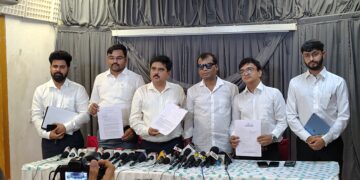
I’d want to leave you with a stirring quote from Mr. Colin, the Khori people’ defense attorney. He draws attention to the fact that the government exclusively concentrates on destroying the dwellings of daily wage laborers, while large ashrams, opulent hotels, and extravagant societies are left unaffected. He questions if the government would have the guts to tear down these opulent buildings. Let these words strike a chord inside us, motivating us to confront the injustices that marginalized and voiceless people experience. Together, we can work to create a society that is more just and caring.