
























Accusing Moscow’s military leadership of depriving his men of ammunition, the owner of Russia’s Wagner military contractor vowed on Friday to pull his troops from the drawn-out conflict for the eastern Ukrainian city of Bakhmut the next week.
Wealthy businessman Yevgeny Prigozhin, who has ties to Russian President Vladimir Putin, said the Wagner fighters intended to take Bakhmut by May 9, which is Victory Day in Russia and a celebration of the country’s victory over Nazi Germany. He said that they were undersupplied and suffering significant casualties and that they would transfer command to the regular army on May 10.
Prigozhin has previously erupted in wrath over a lack of ammunition and accused the Russian military, whom he has long been at odds with. He is known for his bravado and has made unsubstantiated accusations and threats in the past.
The spokespersons for Prigozhin also released a video of him yelling, cursing, and pointing towards roughly 30 uniformed corpses that were laying on the ground on Friday. He wants ammunition from Russian Defence Minister Sergei Shoigu and General Staff Chief Valery Gerasimov, claiming they are Wagner warriors who died only on Thursday.
“These are someone’s fathers and sons,” Prigozhin adds. The filth that doesn’t provide us with ammunition will eat their own guts in hell, he said.
Yohann Michel, a research analyst with the think tank International Institute for Strategic Studies, said that normally it is best to treat Prigozhin’s remarks with caution, but “this time I would take a shovel of salt, at the very least, or maybe a truck.”
It is unclear why Prigozhin is threatening to withdraw his men, Michel remarked. He may be worried about losing his job for failing to capture the city and want to claim that he departed on his own; he may wish to regroup without being seen as withdrawing; or he may really need extra ammo.
Michel, a resident of Berlin, said: “The only thing I am taking seriously from that declaration is that Bakhmut is probably not ready to fall.”
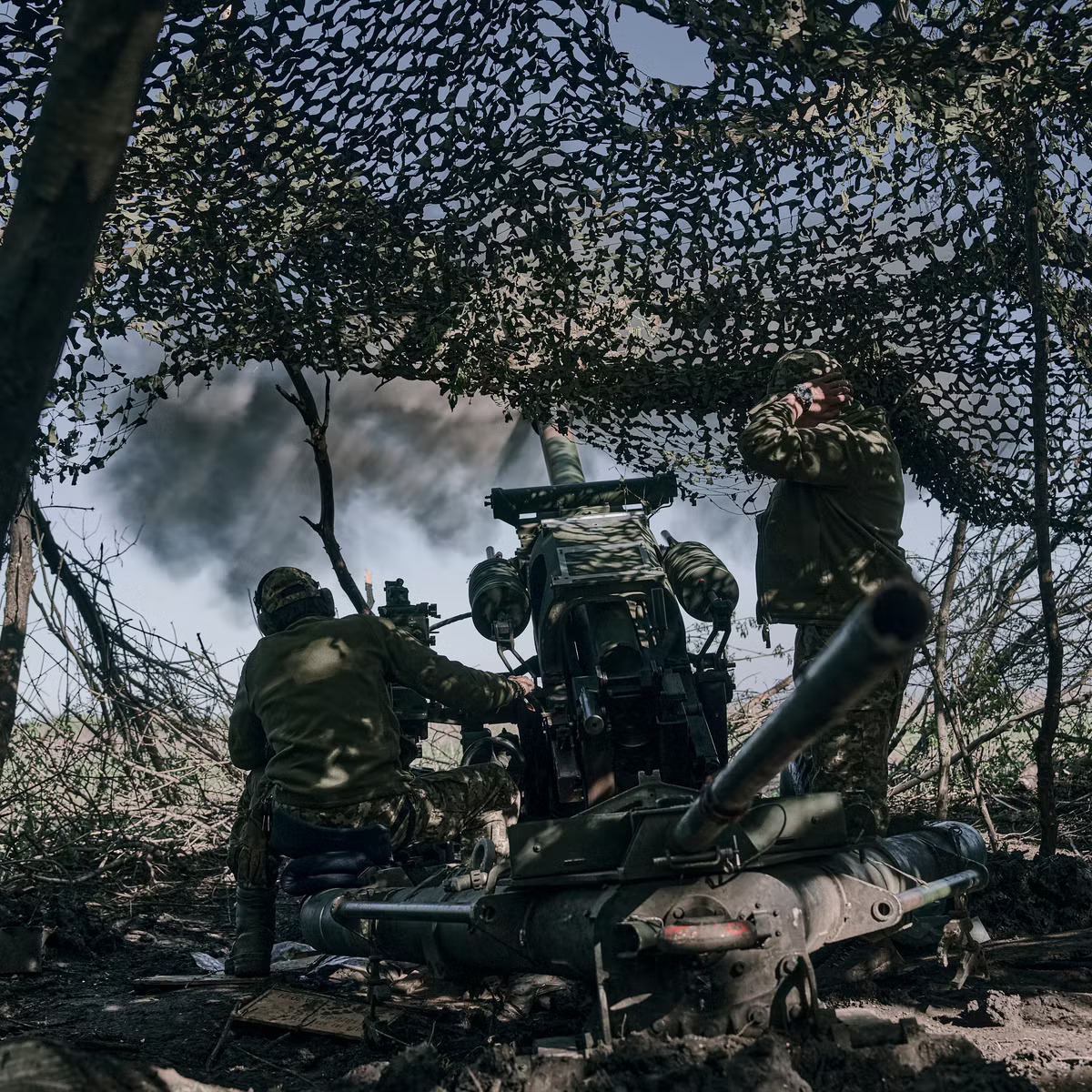
The longest and most bloody fight of the conflict, for possession of Bakhmut, has been led by Wagner. There were battles for more than eight months, and thousands of lives are said to have been lost. Wagner’s withdrawal would be a devastating blow to the Russian operation.
Bakhmut has become as a significant emblem of Ukrainian resistance against Russian invasion. According to President Volodymyr Zelenskyy, its loss might start gaining support from other countries for an agreement that could oblige Ukraine to make unpalatable concessions.
Officials in Ukraine had doubts about Prigozhin’s assertions regarding a scarcity of munitions. The Associated Press was informed by military intelligence spokesman Andrii Cherniak that Prigozhin was attempting to “justify their unsuccessful actions” in capturing Bakhmut by May 9.
Shoigu didn’t answer to Prigozhin right away, but according to his ministry, he sent a directive to a senior official to make sure that Russian forces had “continuous supply” of all required weaponry and military hardware. Additionally, on Friday, Shoigu was shown reviewing military supplies and weaponry intended for Russian soldiers in Ukraine as a counterweight to Prigozhin’s prominence.
Around 50,000 people were believed to be fighting in Ukraine by the end of last year, including 10,000 contractors and 40,000 prisoners that the firm had enrolled. Thus, it constitutes a minor component of Russian combat forces. As of this week, according to John Kirby, a spokesperson for the U.S. National Security Council, roughly half of the 20,000 Russian soldiers killed in Ukraine since December were Wagner fighters in Bakhmut.
Wagner’s soldiers would have to leave Bakhmut if Prigozhin did so, according to Michel.
“I believe we can say it is the end of this part of the attack for Russia if he is taken from the front line,” he added. “Except if Russia shockingly has reserves that they did not want to use earlier.
Since Wagner was founded in 2014, Prigozhin and the military hierarchy have had a tense relationship. He openly criticised certain senior Russian military leaders of ineptitude during the conflict in Ukraine, which is exceedingly rare in Russia’s closely regulated political structure.
Although Prigozhin chastised one general, other senior officials seem to have kept the Kremlin’s confidence. Some analysts believed that Putin’s decision to appoint Gerasimov as commander of the Russian military in Ukraine in January was an effort to reduce the size of Prigozhin.
Prigozhin said on Friday that despite sending out “tens and rarely hundreds” of men, Russia’s regular army is only “barely holding on to” the flanks that were meant to be protected while Wagner forces advanced.
“Wagner ran out of resources to advance in early April, but we’re advancing despite the fact that the enemy’s resources outnumber ours fivefold,” read Prigozhin’s statement. “Our losses are increasing exponentially every day due to the lack of ammunition.”
The deputy director of the Ukrainian defence ministry, Hanna Maliar, said on Friday that several Wagner ammunition dumps had been destroyed by Ukrainian artillery.
In order to enlist warriors, Prigozhin has visited Russian jails, offering convicts pardons if they make it through a six-month stint serving with Wagner in the front lines. Wagner mercenaries have been charged with multiple human rights violations throughout Africa, particularly in the Central African Republic, Libya, and Mali, according to Western nations and UN experts.
Although observers think it won’t be crucial to the end of the conflict, Bakhmut, which is roughly 55 kilometres (34 miles) north of the regional capital of Donetsk that is controlled by Russia, has tactical military worth for Moscow.
The city was a significant industrial hub and had 80,000 residents before World War II. The town is currently deserted.
The 14-month fight has reportedly ran out of ammunition, according to Western officials and observers, since it has become an attrition war during the winter.
Prigozhin had expressed his intention to leave Bakhmut in a conversation with a Russian military blogger last week.
Dmitry Peskov, a spokesman for the Kremlin, declined to comment more when asked by The AP about Prigozhin’s remarks on Friday.
Also on Friday, a drone struck an oil refinery in southern Russia’s Krasnodar area, which borders the occupied Crimean Peninsula, and it briefly caught fire, according to emergency personnel and the Russian state news agency Tass. According to the report, the fire was tiny and easily extinguished.
Ilyinsky Refinery has been targeted by drones for the second day in a row. Over the last week, reports of drone assaults on oil installations in Russian districts bordering Ukraine have been nearly daily.