













Beginning on Monday, the Bhutanese King Jigme Wangchuk will go to India for three days.
Both parties will examine their bilateral cooperation and work to strengthen their bilateral relationship while the monarch is in town. According to the Ministry of External Affairs, the Bhutan monarch would be joined by Dr. Tandi Dorji, the country’s foreign minister, and other top officials.
Given the extraordinary affinity and collaboration between India and Bhutan, which is characterised by mutual trust and understanding, King Jigme Wangchuk’s visit will provide Bhutan and India with an opportunity to assess the whole spectrum of their bilateral relations.
The invitation to the Bhutan King’s visit came from President Droupadi Murmu.
He will meet with Prime Minister Narendra Modi and President Droupadi Murmu during his visit, which is in line with the long-standing tradition of frequent high-level exchanges between the two nations.
Senior officials including the minister for external affairs, S. Jaishankar, will also meet with the king of Bhutan.
Bhutan’s biggest trade partner for a long time and still the main source of foreign investment.
The Indian government formally opened seven new trade routes for bilateral and transit trade between India and Bhutan in November 2021. Additionally, new market access was provided to officially allow the export of 12 agriproducts from Bhutan to India, and various special exceptions/quotas for export were also provided.
When Bhutan’s Five Year Plans were first introduced in the early 1960s, India has provided financial support for the country’s socioeconomic growth.
India provided Bhutan approximately $4.500 billion in support for the 12th Five Year Plan, including Direct Budgetary Assistance, modest development projects, other multi-sectoral project-tied aid, etc.
According to our “Neighborhood First Strategy,” fresh market access has been provided for three commodities from India to Bhutan and five agricultural products from Bhutan to India (areca nut, mandarin, apple, potato, and ginger) (Tomato, Onion, and Okra).
The practise of regular high-level exchanges between India and Bhutan has helped to maintain the two countries’ special relationship. Noteworthy visitors include Prime Minister Narendra Modi in August 2019 and Foreign Affairs Minister S. Jaishankar in 2019 and April 2022, among other high-profile figures.
Also, Foreign Secretary Vinay Kwatra paid a visit to Bhutan in January 2023.
A parliamentary delegation from Bhutan, headed by Wangchuk Namgyel, Speaker of the National Assembly of Bhutan, paid President Murmu a visit at Rashtrapati Bhavan earlier in February 2023.
The President welcomed the group and said how much we respect the complex and distinctive partnership between India and Bhutan.
The President said that Bhutan will leave the group of nations known as the Least Developed Countries (LDC) this year and set out on a road to become a High Income Economy by 2034.
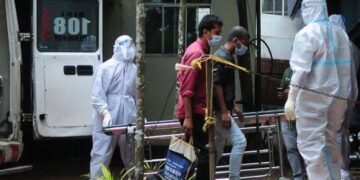
In keeping with the unique and special relationships between India and Bhutan, India made sure that Bhutan continued to receive commerce and necessities notwithstanding COVID-19-related lockdowns. 13 consignments of medical supplies were sent in particular support during the COVID-19 epidemic, and the first nation to get Covishield vaccines.
The updated bilateral trade, commerce, and transit agreement between India and Bhutan went into force in 2017 and has a ten-year lifespan.
The Treaty of Friendship and Cooperation, which the two nations signed in 1949 and was reaffirmed in February 2007, serves as the fundamental tenet of ties between India and Bhutan. Regular high-level interactions between the two nations have strengthened the bilateral relations.
In order to support the Royal Government of Bhutan in realising its goal of prosperity for everyone, India is also exploring new areas of bilateral collaboration with Bhutan, such as space cooperation, smart agriculture, youth and sports, startups, renewable energy, and digital development.