











When President Cyril Ramaphosa hosted the annual event in Pretoria on Friday, two South Africans of Indian descent—the late struggle icon Ebrahim Ismail Ebrahim and scientist Dr. Aboubaker Ebrahim Dangor—were among the many people who received National Orders.
The highest honors bestowed by South Africa to its people and notable foreigners who have advanced democracy and significantly enhanced the quality of life for South Africans are called National Orders.
The National Orders also honor people for their efforts to creating the democratic, non-sexist, non-racial, and wealthy South Africa that is envisioned in our Constitution.
Popularly known as “Ebie,” Ebrahim died away in December 2019 after a protracted illness, just before his wife Shannon published his memoirs “Beyond Fear – Reflections of a Freedom Fighter.” Alongside Nelson Mandela, Ahmed Kathrada, and other political prisoners, Ebrahim spent time on Robben Island.
At the age of 13, his father joined the liberation cause after his father was repeatedly detained for disobeying South African regulations restricting the movement of Indians. Ebrahim often discussed how Mahatma Gandhi’s Satyagraha technique had served as an inspiration for him as he passionately represented the ANC in circumstances of international war in Sri Lanka, Palestine, Rwanda, Kosovo, Bolivia, and Nepal.
Ebrahim was freed and went into exile to continue his work with the ANC, but security forces from the apartheid regime kidnapped him from neighboring Swaziland, tortured him, and then imprisoned him for a second time on Robben Island.
On Robben Island, he earned two university degrees. Ebrahim served in a number of positions after the liberation of all political prisoners and the election of Mandela as South Africa’s first democratic president, among them as Deputy Minister of Foreign Affairs and Parliamentary Counselor to Mandela.
In his citation, Ebrahim said that he was being awarded the Order of Luthuli in Gold in recognition of his lifetime dedication to the independence of all South Africans.
It stated, “He lived by the bravery of his belief and emerged as a strong adversary to the oppressive apartheid administration. According to Shannon Ebrahim, her late husband was a “gentle giant, even to his family.”
“He inspired us with his unwavering moral principles, his unwavering dedication to improving South Africa (even beyond political emancipation), and his desire to mediate disputes between warring parties throughout the globe as a peacemaker. He was the epitome of humility and never sought praise for the struggles he had throughout his life for freedom. His only wish was that South Africans would read his autobiography “Beyond Fear” to learn more about the struggles of his generation’s revolutionaries in bringing about a new South Africa. Sarah, Kadin, and I, (his children), mourn dad terribly but will always value his legacy, Ebrahim added.
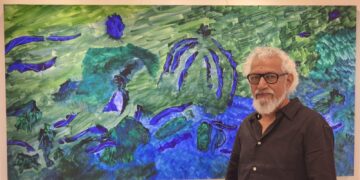
“For his admirable and distinguished contribution to the field of science through his ground-breaking research in physics,” stated Dr. Dangor’s citation as the reason for receiving the Order of Luthuli in Silver.
Since moving to the UK in 1961 to continue his education after earning his first Honours degree from Wits University, Dangor has made his home there.
Due to his wife’s Black ancestry and the white minority apartheid government’s refusal to let her into Bermuda, he was unable to return permanently. Dangor has had several articles published in scholarly publications and has supervised many doctoral students over his career.
“I find it very humbling that Nelson Mandela, our nation’s first post-apartheid president, was the inaugural winner of the Award. I’m hoping that receiving this honor will inspire South Africa’s young scientists,” Dangor remarked. Dangor’s niece, Zubeda Dangor, the founder and head of Johannesburg’s Nisaa Institute for Women, said that he was very reserved and disliked the spotlight. His grandnephew Mohammed Raees Dangor collected his medal on his behalf as he was unable to attend the event.