























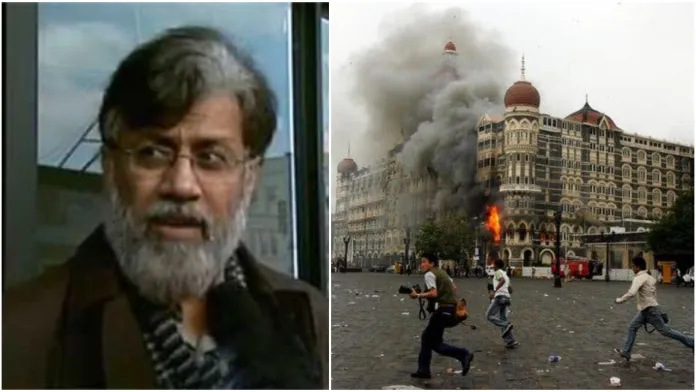
Tahawwur Rana, a Canadian businessman of Pakistani descent, has been granted extradition to India after being requested by that country via the US Government. He is wanted there for his alleged role in the 2008 Mumbai terror attack.
India filed a case on June 10, 2020, requesting the 62-year-old Rana’s temporary detention with a view to extradition. The extradition of Rana to India has the backing and approval of the Biden Administration.
Judge Jacqueline Chooljian, US Magistrate Judge of the US District Court Central District of California, stated as much in a 48-page court order dated May 16 that was made public on Wednesday. “The Court has reviewed and considered all of the documents submitted in support of and in opposition to the Request, and has considered the arguments presented at the hearing,” the order read.
“Based on such review and consideration and for the reasons discussed herein, the Court makes the findings set forth below, and CERTIFIES to the Secretary of State of the United States the extraditability of Rana on the charged offences that are the subject of the Request,” the court said.
Rana was detained in the US after India requested his extradition for his involvement in these assaults.
The National Investigation Agency (NIA) of India is looking into his involvement in the 2008 Lashkar-e-Taiba terrorist strikes on September 11, which were carried out from Pakistan. According to the NIA, it is prepared to start the process of bringing him to India via diplomatic channels.
Attorneys for the US Government claimed during court proceedings that Rana knew that his childhood friend, the Pakistani-American David Coleman Headley, was a member of Lashkar-e-Taiba (LeT), and that by helping Headley and providing him with a cover for his activities, he was assisting the terrorist group and its associates.
Rana was aware of Headley’s meetings, the topics that were covered, and the attack preparation, including some of the targets. According to the US authorities, Rana participated in the plot and there is reason to believe that he committed the actual crime of committing a terrorist attack.
On the other side, the extradition was contested by Rana’s lawyer.
Six Americans were among the 166 victims of the 2008 Mumbai terror attacks, in which ten Pakistani terrorists besieged Mumbai for more than 60 hours while murdering civilians at important and well-known places.
Federal prosecutors said there is substantial evidence that the components of murder would be established since participants of the conspiracy conducted activities that resulted in death with the aim to cause death, or at the very least did those acts knowing its impending hazards.
India and the United States have an extradition agreement in effect. The court determined that the treaty’s authority to order Rana’s extradition to India is complete.
According to the judge, India has issued an arrest warrant for Rana and accused him of the following crimes, for which the US is currently prosecuting him: (a) conspiracy to wage war, murder, commit forgery with intent to defraud, use as genuine a forged document or electronic record, and commit terrorism. (b) engaging in hostilities, (d) committing murder, (e) engaging in terrorist activity, and (f) conspiring to do so.
The court determined that the charges against the defendants “constitute extraditable offenses within the meaning and scope of the Treaty and over which India has jurisdiction.”
According to the judge, there is enough credible evidence to establish probable cause that Rana is the person who has been charged in India and whose extradition is being sought in this case, and that Rana committed the crimes for which extradition is being requested.
“It is therefore ordered that Tahawwur Hussain Rana be and remain committed to the custody of the United States Marshal pending a final decision on extradition and surrender by the Secretary of State to India for trial of the offences with respect to which extradition has been granted pursuant to Title 18, United States Code, section 3186 and the Treaty,” the judge said.