






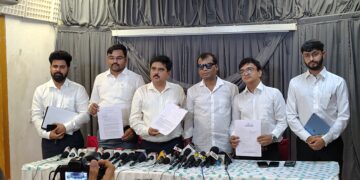






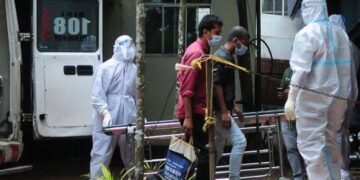









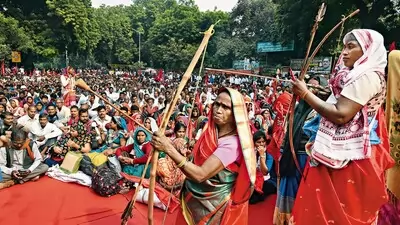
In Madhya Pradesh, in July, a video showing an upper caste guy urinating on a helpless Adivasi man named Dashmat Rawat went viral, inciting waves of outrage on social media. A few days later, on July 8, The Hindu published another video showing two tribal boys being attacked by a gang of men in Madhya Pradesh. Another video of Kuki women being beaten and sexually harassed while being marched went viral a few weeks ago, inciting outrage among the public, activists, political parties, and communities. Following the event, a number of demonstrations took place, and among them were Adivasis from West Bengal who came out in broad coalitions to draw attention to the growing atrocities committed against Adivasis in the nation.
But these are not unique occurrences, and they may merely be the tip of the iceberg. According to the National Crime Record Bureau’s (NCRB) most recent data from 2021, there were 6.4% more crimes and atrocities committed against Scheduled Tribes (STs) in 2021 (8,802 instances) than there were in 2020 (8,272 incidents). The state with the largest percentage of atrocities against STs in 2021 was Madhya Pradesh (2627 instances, or 29.8%), followed by Rajasthan (2,121 incidents, or 24%), and Odisha (676 cases, or 7.6%).
What are the Adivasis?
Despite having their rights guaranteed by the constitution, Adivasis, who are classified as Scheduled Tribes (ST) in India, nonetheless struggle to meet their fundamental necessities. They continue to have limited access to equitable opportunities, including infrastructure, community healthcare, assistance for sustainable livelihoods, drinking water and sanitary conditions, and education.
According to the 2011 Census, there are 104.3 million tribal people in the nation, or 8.6% of the overall population. Furthermore, just 10.03 percent of them reside in cities.
Numerous tribal groups are comprised of adivasis. Given that India has been a home to several indigenous people in different states, speaking hundreds of languages, there are numerous disagreements among sociologists and governments on who comprises Adivasis. So, in order to qualify for specific affirmative action, the Government of India has recognized them together as Scheduled Tribes under Schedule 5 of Article 324 of the Indian Constitution. They have also been placed under a single category, similar to Scheduled Castes.
Adivasi protection under the Constitution
protection of culture and education
Adivasis are protected under the Constitution’s Articles 15 (prohibiting discrimination based on race, caste, sex, or place of birth), 29 (protecting the interests of minorities), and 350 (right to preserve distinctive language, script, or culture).
Article 15(4) gives the State the authority to create any specific provisions for the progress of SCs and STs or any other socially and educationally underprivileged class of people. Article 29 (1) states that “any section of the citizens residing in the territory of India or any part thereof having a distinct language, script, or culture of its own shall have the right to conserve the same”.
Every State and local authority within a State should endeavor to offer suitable facilities for teaching in the mother language at the elementary level of education to children belonging to linguistic minority groups, as stated in Article 350 A.
Social protection
They are protected by Article 17, which outlaws and bans the “untouchability” practice. Since most bonded laborers are from the SC and ST groups, Article 23 of the Constitution forbids the trafficking of human persons as well as beggar and other similar types of forced labor. This legislation is particularly important for defending the rights of these people.
Under Article 24, which states that no child under the age of 14 may be worked in a factory, mine, or engaged in any other dangerous occupation, the social rights are further protected.
All Hindu religious organizations must be accessible to members of all classes and castes under Article 25(2)(b). This expressly outlaws the widespread upper-caste Hindu practice of chaining members of ST groups and restricting their access to places of worship.
Political protections
Article 164(1), which establishes Tribal Affairs Ministers in Bihar, MP, and Orissa, as well as Articles 330 and 332, which guarantee seats for SCs and STs in the Lok Sabha and State Assemblies, respectively, preserve the political rights of Adivasis.
Under Articles 371 A, B, C, F, G, and H, which each include unique provisions for Nagaland, Assam, Manipur, Sikkim, Mizoram, and Arunachal Pradesh, the rights are further safeguarded.
According to Article 46, the State is required to safeguard the weaker groups of the population from social injustice and all sorts of exploitation while also promoting their economic and educational interests, particularly those of the Scheduled Castes and Scheduled Tribes.
In accordance with Article 244 (1), any State other than Assam, Meghalaya, Mizoram, and Tripura, which are covered by the Sixth Schedule and Clause (2) of this Article, shall have administrative responsibility over the Scheduled Areas and Scheduled Tribes in accordance with the requirements of the Fifth Schedule.
Grants-in-aid are given to certain States (STs&SAs) included in the Constitution’s Fifth and Sixth Schedules in accordance with Article 275.
service protections
Articles 16(4), 16(4A), and 16(4B) of the Constitution allow for reservations in jobs and services.
What are the timetables for Fifth and Sixth?
The administration and management of the scheduled regions and scheduled tribes are covered under the Fifth Schedule. These regions are dispersed among the states of Rajasthan, Himachal Pradesh, Gujarat, Madhya Pradesh, Odisha, and Andhra Pradesh. These states also have Tribes Advisory Councils, which give their governors additional authority and unique duties.
The administration of the tribal regions of Assam, Mizoram, Meghalaya, and Tripura, which have autonomous district councils with a long history of self-management, is addressed in the sixth schedule.