

























On the fringes of the Group of Seven meeting on Saturday, President Joe Biden sought to mobilize regional cooperation against China amid a deadlock in Washington on how to keep the US from defaulting.
Biden began his third day in Japan at the annual gathering of the most powerful democracies with a briefing from staff on the latest fits and starts in the showdown over how to raise the federal debt limit in an effort to prevent a result that would jolt the global economy and prove to be a boon to Beijing.
The president squeezed in meetings on Saturday to oppose China’s buildup across the Indo-Pacific, including with the US, Australia, Japan, and India’s so-called Quad cooperation.
In order to enable Biden to return to Washington earlier on Sunday in the hopes of finalizing an agreement to raise the debt limit before the US runs out of money to pay its obligations, the Quad members had planned to meet in Sydney next week. However, they postponed their meeting for the sidelines of the G7.
The curtailed tour has highlighted a basic conflict guiding Biden’s presidency: At crucial junctures, domestic issues keep getting in the way of his attempts to convey to the world that the US is recovering the role of global leadership.
The president has mostly avoided making major public pronouncements at the summit and departed early from Friday’s leader dinner.
Instead, he has been spending time in a room adjacent to his hotel suite, watching a video monitor where staffers in Washington have been keeping him updated on the back and forth of debt ceiling negotiations.
National security advisor Jake Sullivan stated that Biden has been under pressure from international leaders about the Washington, D.C., debt ceiling dispute.
There is, however, no fear, at least not yet, according to press secretary Karine Jean-Pierre, despite the enormous curiosity in how the president would handle a domestic dispute with international implications.
It’s not a life-or-death issue, she said.
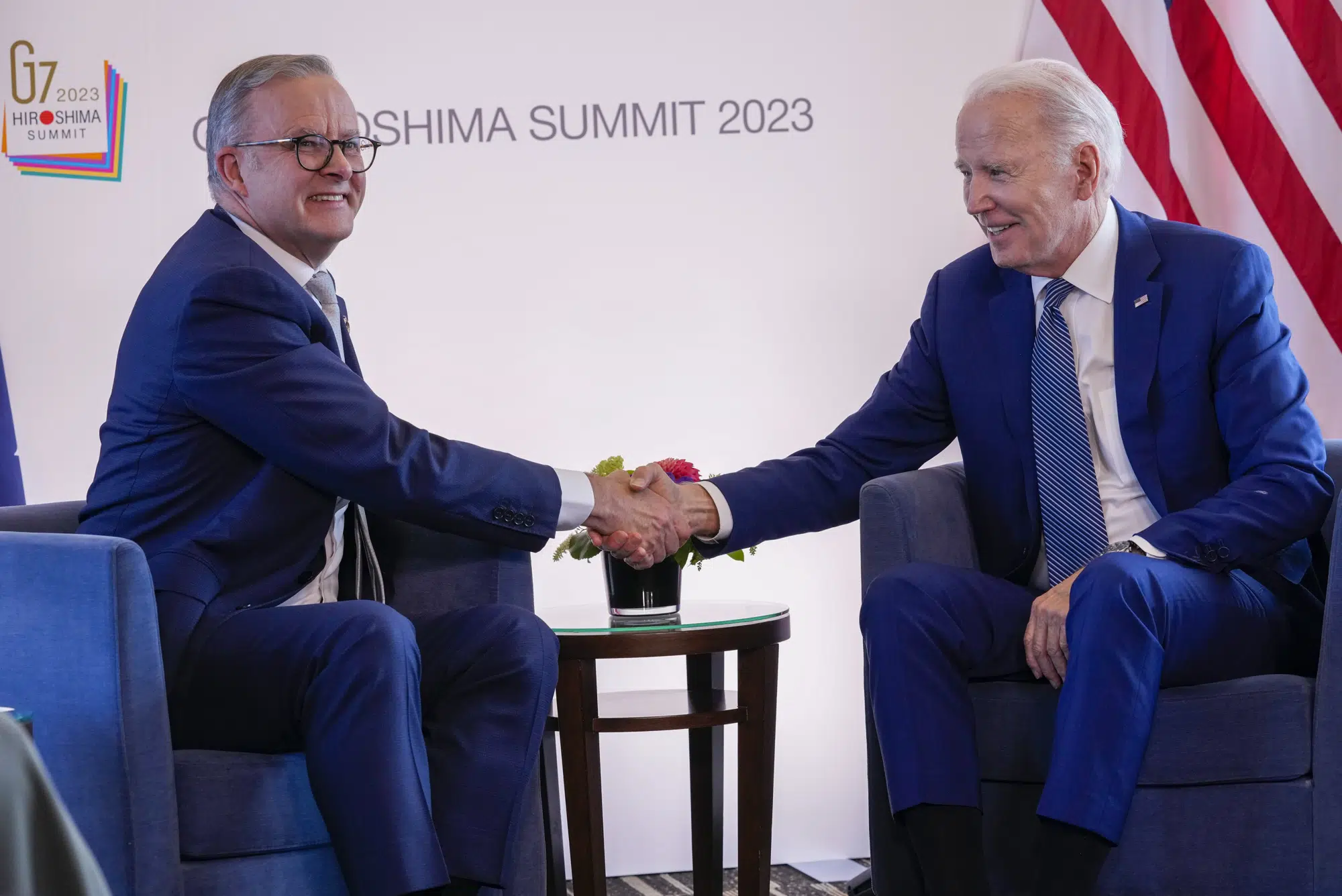
In addition, on the sidelines of the summit, Biden held a meeting with Australian Prime Minister Anthony Albanese instead of traveling to that nation later this week for the Quad summit.
US authorities said that the trip will be postponed; as a compromise, Biden has invited Albanese to Washington for a state visit.
Albanese said that he was aware of the situation but accepted Biden’s apology for bypassing Australia.
He told Biden, “I would have done exactly the same thing,” adding, “I’m very much looking forward to the state visit.”
As they both want to reduce dependency on China for supplies, the presidents agreed to strengthen their relationship in creating the raw materials needed for renewable energy technology.
They also released a joint statement describing fresh areas of defense, commerce, and space cooperation.
In addition, the president sent Secretary of State Antony Blinken to Papua New Guinea to take his place at a meeting of Pacific Island countries on Monday.
To bring Biden back to Washington more quickly, that presidential trip was also canceled.
The American president would have been visiting the nation for the first time with Biden’s trip. The US and China are actively courting Pacific island states as they vie for influence in regions of the globe where maritime channels are important.
Biden and other global leaders were expected to reach an agreement in Hiroshima on a framework for enhancing their own economic resilience, acknowledging that for developed nations, large levels of trade with China now pose more of a danger than an opportunity.
The G7 leaders would admit that “we do seek to cooperate with China on matters of mutual interest,” according to Sullivan. And that we’ll do our best to solve the serious issues we have with China in a number of areas.
He reaffirmed a line often said by G7 leaders, according to which the organization wants to “de-risk, not decouple from China.”