























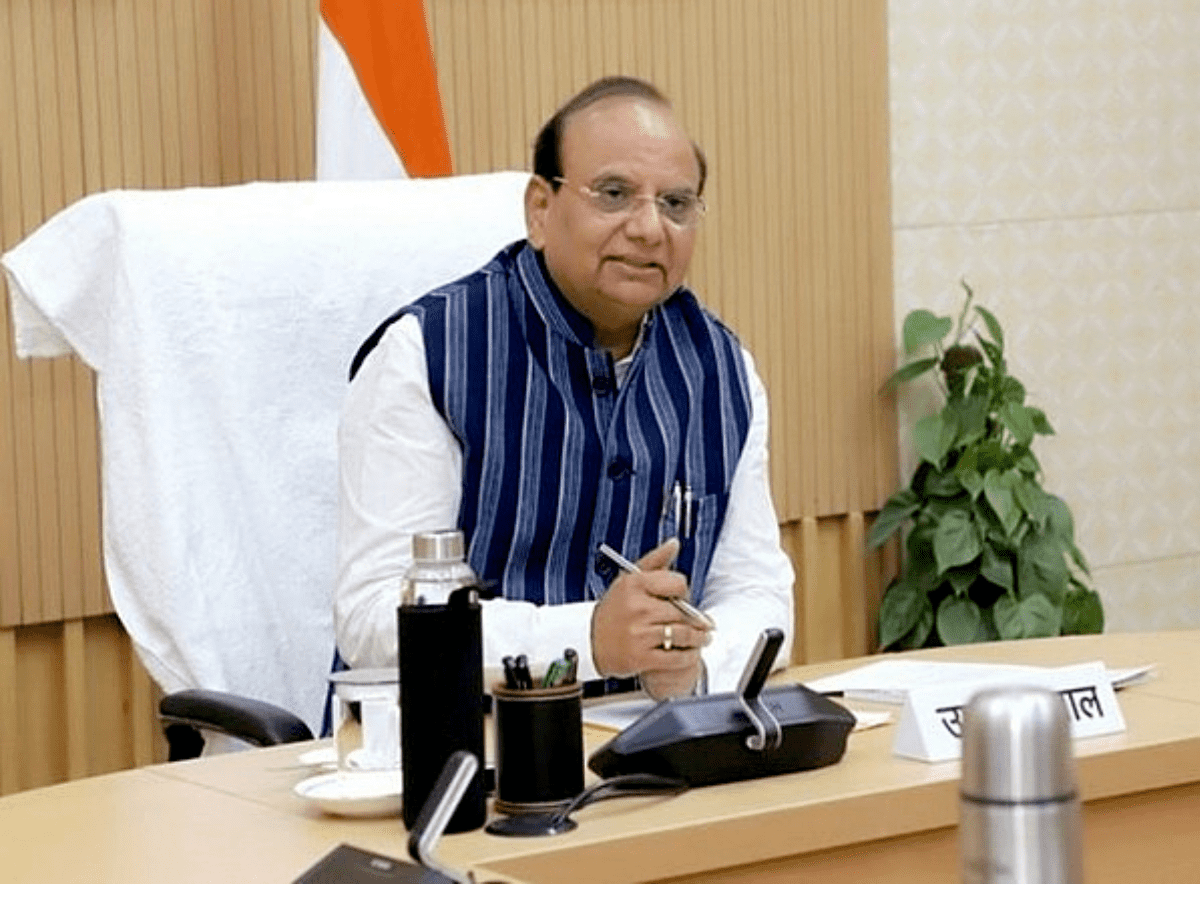
The political elite headed by Arvind Kejriwal was accused of monopolizing the concerns of the residents of the city, but the lieutenant governor of Delhi mounted a resolute defense in front of the Supreme Court. The lieutenant governor’s office deemed it “fundamentally flawed” to argue that only they represent Delhi residents’ interests in an affidavit provided to the top court, arguing that the democratically elected central government, acting with the President’s assistance and guidance, continues to be mindful of the capital’s needs.
The affidavit was submitted in response to a complaint made by the city administration over the controversy surrounding the selection of the chairman of the Delhi Electricity Regulatory Commission (DERC). In the middle of the legal dispute, a bench presided over by Chief Justice D Y Chandrachud declared its intention to investigate the constitutionality of a clause in the most recent ordinance controlling nominations, including those of the DERC chairman. As the head of the city’s energy regulating body, Justice (retired) Umesh Kumar’s swearing-in has been postponed, according to PTI.
The current power struggle between the Bharatiya Janata Party-led Centre and the Aam Aadmi Party (AAP) government in Delhi has a new flashpoint with the selection of Justice Kumar as the DERC head. The Chief Minister Arvind Kejriwal and the Lieutenant Governor V K Saxena were advised by the Supreme Court to put aside their “political bickering” and consider the names of retired judges who could be able to chair the DERC at the court session.
The lieutenant governor’s administration stressed in their affidavit that Justice Kumar’s appointment as the DERC chairman was legal and free of any irregularities. It said that the writ suit filed by the Delhi government was “completely misconceived and liable to be dismissed,” and that Justice Kumar had been chosen by the President with the approval of the Allahabad High Court.
According to the affidavit, the Delhi government’s argument that the section 45D entities’ financial ties to the Legislative Assembly budget and their activity on behalf of Delhi residents cannot stop power from being transferred to the Union of India. It also emphasized the cooperative federalism tenets and the fact that Delhi, in spite of Article 239AA, is a Union Territory where the central government’s engagement is consistent with the governance tenets.
A proposal for the nomination of Justice Rajeev Kumar Shrivastava, a retired judge of the Madhya Pradesh High Court, as the DERC chairman, as authorized by the Delhi chief minister, was brought before the LG in January, according to the LG office. Justice Shrivastava, however, said that he was unable to accept the position because of obligations to his family.
The petition failed to present sufficient justification for requesting a judicial review of the challenged ordinance or invoking Article 32 of the Indian Constitution, according to the affidavit. It also did not claim any infringement of any basic rights under Part III.
The affidavit attacked the petitioner’s actions, calling their attitude of a senior retired judge—a member of the judiciary and a constitutional functionary—extremely disrespectful and mala fide. It stressed the legislative authority and plenary jurisdiction over the National Capital Territory of Delhi, adding that the President’s ability to issue an ordinance in accordance with Article 123 of the Constitution is undeniable in light of the stated goals and justifications. As a result, it was found unlawful to contest the ordinance on the basis that it was arbitrary.
On Thursday, the Supreme Court will continue deliberating the matter and examining the opposing justifications put up by the Delhi government and the Lieutenant Governor’s office.