























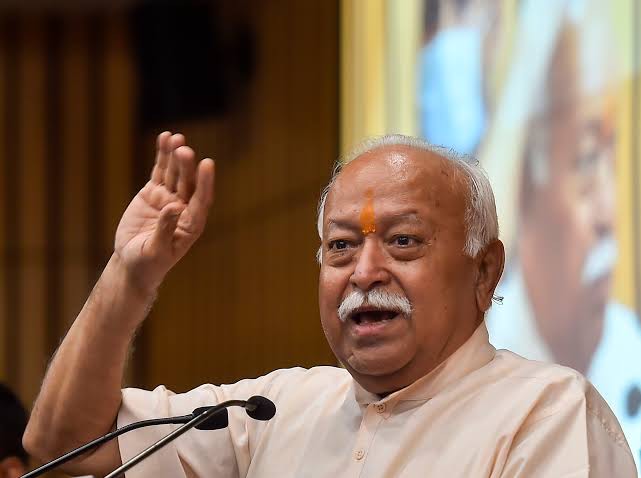
Rashtriya Swayamsevak Sangh (RSS) chairman Mohan Bhagwat discussed the historical significance of the occasion ahead of the Pran Pratistha celebration at Ram Mandir and advocated an end to the decades-long turmoil surrounding the Ayodhya issue. Bhagwat emphasised India’s 1,500-year-long battle against foreign invaders in an article that was first published in Marathi. He also claimed that foreign forces had deliberately destroyed sacred sites in order to demoralise and weaken Indian society.
“The goal of early invasions was to seize, and occasionally—like Alexander’s invasion—they were intended to colonise. But the attacks carried out by the West in the name of Islam only served to divide and destroy society. In order to govern over Bharat without interference from the weaker society, their goal was to demoralise the Bharatiya society, the author wrote.
Watch this space for all the most recent Ram Mandir updates! Go here to go there.
“The same intent and goal were behind the destruction of the Shri Ram temple at Ayodhya. The RSS chief continued, “This invasion approach was not restricted to Ayodhya or any particular temple; rather, it was a global military tactic.
Bhagwat emphasised the repeated attempts to dominate the location of Lord Ram’s birth, pointing out the unsuccessful 1857 War of Independence and the British attempts that followed to split Muslims and Hindus.
He also talked about the protracted legal dispute that occurred in the years following independence and the Ram Janmabhoomi movement, which gained popularity in the 1980s and resulted in the Supreme Court’s 2019 ruling in favour of the Hindu side.
What was the movement of Rama Janmabhoomi?
An Indian socio-political movement known as the Ram Janmabhoomi movement was based on the contentious Ayodhya site, which Hindus consider to be the birthplace of Lord Ram. The movement became well-known in the latter half of the 20th century, especially in the 1980s and 1990s. The movement’s main goal was to have a temple devoted to Lord Rama built where the 16th-century mosque known as the Babri Masjid had stood.
For years, the Ram Janmabhoomi-Babri Masjid controversy dominated Indian politics, impacting elections and public opinion.
For several decades, there was a court fight regarding who owned the location. In a historic ruling rendered in 2019, the Indian Supreme Court approved the construction of a Hindu temple at the contentious location and ordered the provision of a different plot of land for the construction of a mosque.
Bhagwat’s appeal for harmony
Bhagwat, who envisioned a society that embodied the ideals of Lord Ram, emphasised the necessity for social rebuilding and harmony.
According to the Dharmic perspective, the majority of people adore Shri Ram, and everyone still regards Shri Ramchandra’s life as the model for moral behaviour. Therefore, the matter should be resolved, he said, ending the tension that has emerged between those in favour and against it.
The creation of the Vishva Hindu Parishad (VHP) and the strong participation of the Bharatiya Janata Party (BJP) in the campaign gave the movement impetus. On December 6, 1992, a sizable group of Hindu activists—among them some political leaders—demolished the Babri Masjid, marking the height of the unrest.
“The resentment that has developed in the interim must also stop. The society’s enlightened members must ensure that the conflict is resolved once and for all. The name Ayodhya refers to a city “where there is no war,” or a location devoid of strife. He continued, “Rebuilding Ayodhya is, in our opinion, both the need of the hour and our collective responsibility on this occasion, throughout the nation.