























In a significant milestone, Pakistan has in principle authorized 28 projects totaling billions of dollars that would be made available to Gulf nations for investment with the long-term goal of reducing dependence on loans and imports.
To solve the nation’s financial problems, the recently created Special Investment Facilitation Council (SIFC), a civil-military forum, is driving rapid economic growth.
According to the list of approved projects, the total amount of investment under the SIFC banner could be greater than the USD 28 billion under the China-Pakistan Economic Corridor (CPEC) if all the plans are adopted by nations like Qatar, Saudi Arabia, the UAE, and Bahrain, according to The Express Tribune.
The industries of food, agriculture, information technology, mining and minerals, petroleum, and electricity are among those with approved plans. Cattle farms, the $10 billion Saudi Aramco refinery, copper and gold prospecting in Chagai, and the Thar Coal Rail connection plan are a few among them.
The Diamer-Bhasha dam, which has also been proposed to China for investment under CPEC, is also a part of the first project.
Since 2013, Pakistan has been home to a number of infrastructural and other projects that are being built as part of the CPEC.
Parliament has previously approved a number of revisions to the Board of Investment (BOI) Ordinance and the Pakistan Army Act in order to provide legal protection for the SIFC’s operations.
To guarantee that work on these programs continues throughout the time of the caretaker administration, amendments to the Election Act have also been submitted.
These rules would provide protection for the decision-makers from any kind of probe by different anti-graft authorities while also allowing for the quick implementation of the 28 multibillion dollar investment projects that were originally authorized.
Another piece of legislation, the Pakistan Sovereign Wealth Fund, is also in the works and would contribute equity to projects that have received SIFC approval, whether they are single-ownership plans or joint ventures with other countries.
Seven lucrative state-owned businesses, including blue-chip enterprises, are having their assets transferred to the wealth fund so they may be used for SIFC-approved initiatives.
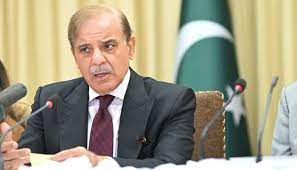
Pakistan has established the SIFC in an attempt to “foster synergy between the federal and provincial governments to facilitate timely decision-making, avoid duplication of efforts, increase investor confidence, and ensure swift project implementation,” according to Prime Minister Shehbaz Sharif.
The government had designated 23 nations for these project pitches, according to sources cited by the Express Tribune, but Saudi Arabia, the UAE, Qatar, and Bahrain would get the majority of attention.
In an effort to expedite the implementation of the plans, Pakistan would provide priority visas to nationals of these nations.
The difficulty will come during the execution stage, as even strategic projects like the CPEC have been hampered by a number of problems like bureaucratic bottlenecks, Pakistan’s reneging on its commitments to China as a sovereign nation, and its undecidability regarding geopolitical alliances.
Under the CPEC, Islamabad and Beijing had envisioned a total investment of USD 62 billion, but less than USD 28 billion has actually taken place.
After the prime minister and the military establishment regained control of the country’s finances and secured a new USD 3 billion agreement with the International Monetary Fund (IMF), Pakistan barely escaped a sovereign default last month.
In order to increase Pakistan’s non-debt inflows and decrease its dependency on imports, the civil-military leadership has now decided to jointly manage the economy.
The bulk of these projects, according to the sources, would be carried out on a government-to-government basis. They said that some of them may be put up for worldwide competitive bidding.
A proposal for corporate farming on 10,000 acres in the Cholistan desert, which would ultimately be expanded to 85,000 acres, was authorized by the SIFC’s apex committee. According to the reports, Qatar was interested in this farm to help with its demands for food security.
The establishment of a dairy firm housing 20,000 Holstein Friesian cattle, an international breed of dairy cow, was also authorized by the top body of the SIFC, and the decision allowed for the expansion of the number of farms to five or more.
Additionally, it supported the creation of a corporate farm with 30,000 animals that may grow to five or more.
The SIFC also approved the creation of a corporate camel farm with 10,000 camels that might eventually grow to five or more.
The Chiniot Iron Ore Project, the Barite-Lead-Zinc Project, and the explorations for copper and gold in Chagai as well as lead and zinc in Khuzdar have all received the approval of the SIFC.
The TAPI Gas Pipeline Project and a Saudi Aramco oil refinery worth USD 10 billion were both authorized for investment under the SIFC’s auspices.
According to the sources, the SIFC had also approved the creation of technology zones, a project for investing in the optical fiber network, cloud infrastructure, a semiconductor designer, the manufacturing of smart devices, a global skill hub scheme, and various centers of excellence.
For investment reasons, certain significant power sector projects have been selected for sharing with the Gulf nations. These included the very expensive Thar Coal Block II and Diamer-Bhasha Dam. Additionally approved are the solar power projects in Layyah and Jhang.
In a same vein, the SIFC has also authorized a hydropower project at Rajdhani and two transmission lines from Ghazi Barotha to Faisalabad and Matiari to Rahim Yar Khan. According to the sources, the proposal also included a project involving Reactive Power Compensation Devices and battery storage for frequency management.
According to The Express Tribune, the SIFC also approved a feasibility assessment for a plan to build a water reservoir for using Cholistan’s surplus floodwater for agriculture and requested an update on the Chashma Right Bank Canal Project.