



















In the lead-up to the pivotal Lok Sabha elections, the nation is seeing a frenzy of political activity as members of the governing BJP and the opposition’s INDIA alliance compete to present their various narratives on a variety of venues.
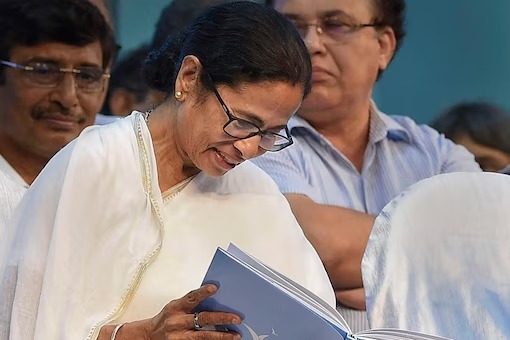
In the midst of heated debates over agendas, seat-sharing, and how to handle the impression of the Ram Temple, there is a senior politician who finds time to write despite her busy political and administrative schedule. With 141 books under her belt, Mamata Banerjee has established an unchallenged lead among the current Chief Ministers, News18 has learned.
While more than 17 of her works were translated into Hindi, Santhali, and Punjabi, at least eight of her books were written in Urdu. According to a senior member of Dey’s Publishing House, which publishes all of the books authored by the West Bengal chief minister and supremo of the Trinamool Congress, she has 136 published works, five of which will be issued on Thursday when she opens the 47th International Kolkata Book Fair.
After Durga Puja, the city’s book fair has long been regarded as the state’s second-biggest social and cultural event. The book fair had a political and administrative change throughout time, moving from the Leftist rule to Mamata Banerjee’s. The book fair has evolved from being a Leftist, elite, and socialist event to one with more general appeal.
HISTORICAL POLITICS
Haunted by political violence, West Bengal has an odd, but powerful, bond with literature. Since the notion of literature has always been essential to the state’s political culture, Mamata Banerjee began writing down her ideas and exhibiting them at the book fair. Buddhadeb Bhattacharjee, her predecessor, is recognized for at least nine translations of Colombian author Gabriel Garcia Marquez’s novels that are pertinent to Bengali politics, among his other 19 published works.
The Chief Minister never gave up on her writing, despite the fact that her party and government are engaged in multifaceted conflict—some of her party’s members are in jail due to allegations of corruption, while others are subject to ED and CBI summonses and raids. She makes sure that her novels are published annually in between her political endeavors and administrative duties.
Her writings address national and modern political narratives such as the CAA, NRC, the concept of the Constitution, and religion. Her works this year include, among other things, the history and traditions of India.
The book fair across time
As the government provided the infrastructure and other necessities, the number of booths at the book fair increased with time, as did the number of attendees.
It has 560 booths and over 18 lakh visitors in 2022. The number of booths increased to 647 in 2023, and there were 22 lakh more visitors. The Bidhan Nagar Police Commissionerate, which oversees the fair’s management, has statistics indicating that 697 booths have been registered this year.
The Bengaluru Commissioner of Police, Gaurav Sharma, told News18 that the government has always considered the Kolkata Book Fair to be a top priority. Considering the state’s and city’s affinity for books and reading, it also reflects our prominence. We make every effort to support and promote reading. We think that reading books fosters concentration, imagination, and creativity in a variety of ways.
Sharma said, “Around 1,300 police officers will be stationed in and around the fairgrounds to control traffic, secure the area, and manage crowds.” The police preparations amply demonstrate the size and scope of the exhibition.
Four community libraries, known as “Boi Baris” (house of books), are operated by the Commissionerate to encourage reading among local residents and children. The police commissioner oversees and manages the libraries. Bidhannagar Police also embraced the novel notion of local police departments operating “free of cost” libraries for underprivileged children and youth. According to a senior police officer in Bidhannagar, the police-run libraries have a wide variety of volumes, from narrative books and other literature to those required to ace competitive exams.
The Publishers and Bookseller’s Guild general secretary, Sudhanshu Dey, stated: “The book fair has always been special and it has always received a great deal of government support.” However, Mamata Banerjee’s involvement and affiliation with the book fair made things more workable and realistic for us. Approximately 28 nations will take part in the expo this year.
THE CHANGE AND IMPORTANCE TO POLITICS
The Kolkata book fair is a testament to the shifting political and social landscape of West Bengal, spanning from intellectual dominance to state rule. Both the state’s rural and urban people still make reading books a habit.
During her opposition, Banerjee faced ridicule and abuse for her lowly upbringing and impolite speech style. However, Banerjee had become well-established in the Bengali “Bhadralok” culture by the conclusion of her first tenure as Chief Minister and had 68 published works to her credit.
The Kolkata Book Fair serves as a forum for politics as well as a business endeavor for those involved. When the Left Front was in power, the Publishers and Bookseller’s Guild, the event’s organizers, granted the Trinamool Congress space. Later, all political organizations, including the Leftists, the RSS, the VHP, the BJP, and others, had boom booths at the fair. There is room for pro-Naxal literature as well.
The fair has gone through a phase and is now more “democratic,” according to a senior IAS official who saw the change from the Left to Mamata’s rule.
“At this point, the book fair is completely impartial. The unity of culture is greater than it was. The infrastructure that the government has built for connection and law enforcement is massive. The celebration of ideas and beliefs spans two weeks. It used to be an open area for everyone, yet it was formerly a platform for the literate elite. The CM’s intense curiosity has allowed the book fair to eclipse Leftist thought patterns. According to the senior IAS official, who asked to remain anonymous, “the latent Brahminism seems to be less pronounced in a way.”