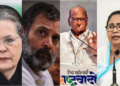


















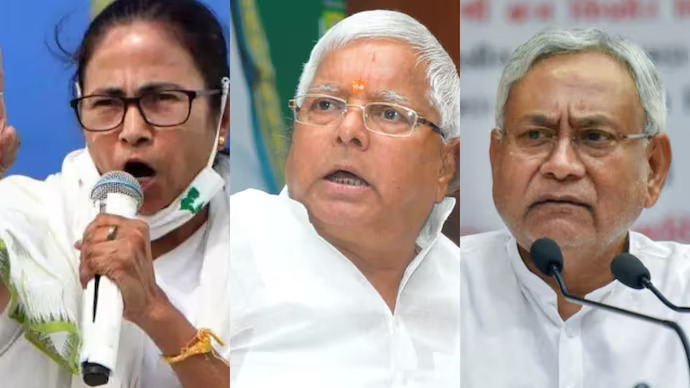
The bloc’s performance at the December 19 INDIA meeting in Delhi was not good; RJD president Lalu Yadav and Bihar president Minister Nitish Kumar left without showing up for the much-anticipated news conference. Mamata Banerjee and Arvind Kejriwal suggested Congressman Mallikarjun Kharge to lead the opposition coalition as prime minister. The opposition alliance’s fourth conference was convened to talk about seat-sharing and campaign strategies for the 2024 Lok Sabha elections.
Nitish Kumar’s Janata Dal (United) is angry with INDIA partners for not immediately appointing its chairman to the position of convenor, considering his background as the alliance’s longest-serving chairman Minister. Senior JDU members have insisted that Mr. Kumar be named the prime ministerial candidate due to his experience as well as what they perceive to be his charm and charisma, which are comparable to those of Prime Minister Narendra Modi. Furthermore, they assert that Mr. Kumar showed his commitment to opposing the BJP in the general election by spearheading the initiatives that eventually came to form a pan-Indian opposition coalition, INDIA.
Since the coalition’s founding, the BJP has made an effort to disprove the concept of the INDIA alliance. They constantly propagate rumors and false narratives because of this. According to RJD national spokesman Nawal Kishore, “Lalu Yadav and Nitish Kumar are the architects of opposition unity to dismantle an undemocratic government led by BJP.”
Actually, JDU MP Sunil Kumar Pintu made a jab at the Congress and its financial difficulties shortly after the fourth alliance conference in Delhi, claiming that the gathering was “limited to tea and biscuits without samosa and without any discussions on any serious issue.”
For background, after the BJP’s victories in Madhya Pradesh, Chhattisgarh, and Rajasthan, Mr. Pintu had lauded PM Modi’s leadership.
Nitish Kumar and Lalu Yadav’s outcry seems to stem from West Bengal Chief Minister Mamata Banerjee’s suggestion that Mr. Kharge be the opposition’s prime ministerial nominee in 2024. Arvind Kejriwal, the chief minister of Delhi, seconded the idea. According to Mr. Kharge, the coalition should prioritize winning elections above choosing a prime minister at this time. Both Ms. Banerjee and Mr. Kejriwal, according to sources, suggested Mr. Kharge because they thought that, as a Dalit, he might aid the coalition in gaining Scheduled Caste votes.
“Neither Nitish Kumar nor Laly Yadav, nor our parties, have publicly proposed any motion favoring Mr. Kumar as the convenor of INDIA alliance or its Prime Ministerial face,” said KC Tyagi, national spokesman for the JDU. It was not even considered in the INDIA bloc summit in Mumbai.”
Mr. Tyagi expressed astonishment at Ms. Banerjee’s action by saying, “I’m not sure how Mamata Banerjee and Arvind Kejriwal came up with the idea for Mr. Kharge’s name. We believe that after working together to get the necessary 272 seats, we should convene to choose the next prime minister.”
According to sources, Mamata Banerjee made her pitch at Lalu Yadav’s request, and Mr. Kejriwal supported Mr. Kharge’s nomination. They claim it was a calculated action with two objectives in mind. Initially, Lalu Yadav aimed to politically undermine Mr. Kumar. Second, it was an obvious no-brainer for the BJP to seek to pit Modi against Rahul Gandhi. According to insiders, Lalu Yadav wants to see Modi and Kharge square off.
A national executive meeting has been called by the JDU on December 29 in Delhi. On the same day, it has scheduled its national council meeting; in the midst of new rumblings, Mr. Kumar may address the party. According to sources, Mr. Kumar could even outline a new direction for the party and himself at the meeting, as well as express his dissatisfaction with the INDIA alliance.
For a long, the Indian government remained mute, and until recently, Mr. Kumar had also expressed his dissatisfaction with the soporific pace of planning in the bloc. Both the Congress and the Samajwadi parties were preoccupied with their rivalry during the assembly elections, seemingly overlooking their mutual commitment from three earlier gatherings. Speaking at a rally in Jharkhand last month, Mr. Kumar vigorously promoted the INDIA alliance’s cause, maybe seeing himself as the alliance’s face. Additionally, he has a public meeting arranged in an assembly segment that is part of Varanasi, PM Modi’s parliamentary seat. On the request of caste-based federations, Mr. Kumar was considering visiting Maharashtra and Haryana in addition to Uttar Pradesh for rallies. Following the most recent INDIA meeting, these proposals could just go.
The Congress is still reeling from its crushing defeat in the most recent state elections, which resulted in a 1: 3 loss of prestige. Its negotiating leverage with opposing parties has drastically decreased. The other parties have thus begun to make more of an effort to establish themselves. One of these ploys is the moniker Mr. Kharge. Mr. Yadav wants Nitish Kumar to be succeeded as Chief Minister by his son, Tejashwi Yadav, the Deputy Chief Minister of Bihar. When it comes to Mr. Kumar, Mr. Yadav lacks confidence because of prior betrayals.
“It was believed that Mr. Kumar would serve as the INDIA alliance’s convenor or PM face. Members of his party desired that he become prime minister. According to Bihar-based senior writer Ravi Upadhyay, “people in the RJD want Tejashwi Yadav to be the chief ministerial face of the ‘Mahagathbandhan’ or INDIA alliance.”
If nothing else, the governing NDA and the INDIA bloc should be closely monitoring the JDU council meeting, which has more than 200 members, to see what Mr. Kumar has to say. The INDIA bloc’s lack of cohesiveness is already being apparent. Each of the bloc’s parties has an own objective. They understand that when they are apart, they are helpless, and that unity is essential. Their campaign is unlikely to cause agitation inside the governing party in the absence of a compelling story.